
Menopause Breakthroughs: Hormones and Sexual Health Options You Need to Know
I have two pieces of menopause news to share this week in this special edition article.
I’m sharing not only to keep you up to date on midlife and menopause care but because these are steps forward in this medical field that are long overdue. Every advance is a step in the right direction which I find exciting in itself.
First update: Hormone Replacement Therapy (HRT) studied in Breast Cancer Gene Carriers

The 2025 San Antonio Breast Cancer Symposium was held where a study was presented about carriers of breast cancer genes (BRCA genes) who took or did not take HRT.
BRCA genes 1 and 2 are well-known to put carriers at high risk of breast and ovarian cancers. In residency, I was taught 80% risk of breast cancer for both BRCA 1 and 2 and 40% risk of ovarian cancer in BRCA 1 and 20% risk of ovarian cancer in BRCA 2. In the literature, these risks fall within a large range, though suffice it to say much higher than the general population (people without these genes).
Carriers can present with cancers at a young age. To mitigate these risks, surgery is often performed once a woman has completed child-bearing to remove her ovaries and tubes. This immediately puts her into menopause, called surgical menopause because it was caused by the surgery itself. Surgery may also be performed to remove breast tissue.
In the study presented, participants were menopausal either surgically or naturally and one group took hormone replacement therapy and one did not.
Some women may opt out of hormone replacement therapy even in menopause due to perceived risk of breast cancer.
The study participants did have their breast tissue. This was not a randomized controlled trial, it was observational.
The study results show that menopausal BRCA carriers did not have an increase risk of breast cancer if they took HRT. !! In the estrogen-alone group, there was a large decreased risk of breast cancer, 63%!
They also looked at estrogen + bazedoxifene. This combination medication is called brand name Duavee. Bazedoxifene is a different kind of medication that can balance the effects of estrogen while avoiding progesterone (if needing or wanting to avoid progesterone), and can have an antagonistic effect on breast tissue which may be desired in someone at high risk of breast cancer.
Although this study was small, it’s so promising. It completely flips the narrative that hormones cause breast cancer on its head and with good reason.
The same scientist published a study in BRCA carriers with a history of breast cancer. This was a smaller study.
A personal history (personal, not family history) of breast cancer is one of the few contraindications to HRT. This means we consider the risk to be greater than the benefit so that treatment is not offered.
In this study, BRCA carriers with a history of breast cancer did not have increased death when using HRT. This is a very exciting one to watch as they continue to collect data.
Second update: Sexual Dysfunction Medication Approved for Use in Menopause
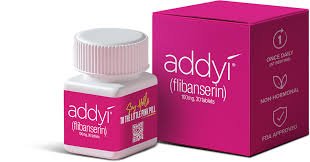
In the world of female sexual health, a medication called Addyi (generic flibanserin) is now approved for use in menopausal women.
This medication is used to treat sexual dysfunction, specifically hypoactive sexual desire disorder (HSDD) that causes distress.
It's marketed as the "little pink pill” analogous to the male’s little blue pill.
Prior to this approval, it was only approved for use in pre-menopausal women, that means women who have not undergone menopause yet.
This doesn't mean it couldn't be used in menopausal patients to this point but that use was considered "off label" since it didn't fall within the FDA approval guidelines. This can mean that the medication just wasn't studied in all populations, so they can't say that it's safe or effective for everyone.
Now, it has been studied in menopausal patients. In the study, those taking flibanserin once daily had increased desire as well as satisfying sexual events.
My take
What an exciting time to have data and options for women to make truly informed decisions for their own health rather than decisions based on fear, coercion, and publicity.
Make sure you subscribe to the e-mail list for the most up to date news!
Resources:
Some of the information contained in this article is the result of my training, medical knowledge, and personal experience without a specific source to be cited.
The author can earn commissions through affiliate links.
Disclaimer: This is not medical advice. This is for educational purposes only. Discuss with your doctor.
https://ascopubs.org/doi/10.1200/JCO.2025.43.16_suppl.10506
https://www.empr.com/news/addyi-indication-expanded-to-include-postmenopausal-women-with-hsdd/